

ai.shna Architecture
System for Harmonized Next-gen Applications
ai.shna is an advanced, modular AI framework engineered by Warke Technologies to redefine how intelligence is embedded across digital systems. Built for scalability, adaptability, and seamless integration, ai.shna powers intelligent decision-making, human-like interaction, and automated workflows across industries.
Whether it's conversational agents, predictive analytics, cognitive automation, or multi-modal data processing— ai.shna is designed to be the thinking core behind next-generation software, platforms, and experiences.
Key Features
- Natural Language Understanding (NLU)
- Multi-agent architecture
- Low-latency inference engine
- On-device & cloud-deployable
- Custom domain adaptation (healthcare, logistics, fintech, and more)
- Privacy-first design with explainable AI
🧠 Powered by Warke Technologies
ai.shna is not just an AI framework—it’s a foundation for building responsible, intuitive, and powerful AI systems tailored to real-world complexity.
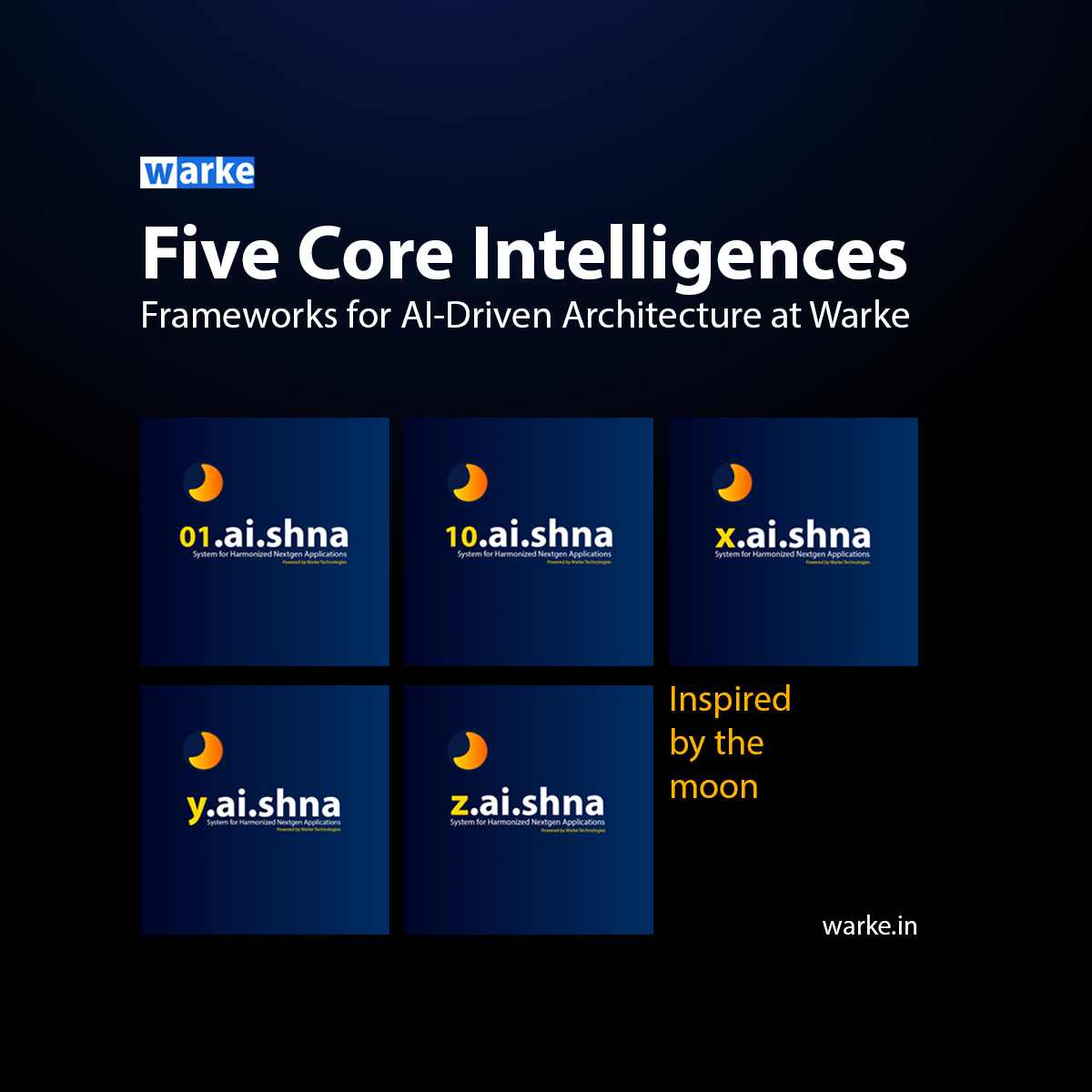
01.ai.shna.
Designing secure, scalable infrastructure on AWS using VPCs, EC2, RDS, EKS, IAM policies, and S3 lifecycle management. We configure autoscaling, load balancing, and multi-AZ deployments for performance and availability.
10.ai.shna.
Implementing Azure VNets, Network Security Groups, Application Gateways, and ExpressRoute for secure connectivity. We architect solutions to support hybrid workloads, BCDR, and custom SLAs with Azure Site Recovery.
x.ai.shna.
Setting up GCP projects with VPCs, GKE clusters, service accounts, IAM, and Cloud Armor. We build secure CI/CD pipelines and integrate Pub/Sub for event-driven architecture across services.
y.ai.shna.
Deploying Dockerized workloads across Kubernetes clusters with Helm, Ingress controllers, service mesh (Istio/Linkerd), and auto-healing strategies. We also provide GitOps practices and observability solutions.
z.ai.shna.
Creating fully automated CI/CD pipelines with GitLab CI, Jenkins, GitHub Actions, or Bitbucket Pipelines. Integration of secrets management, testing stages, security scanning, and deployment to multiple environments.